North Friesland Blog Information on current topics
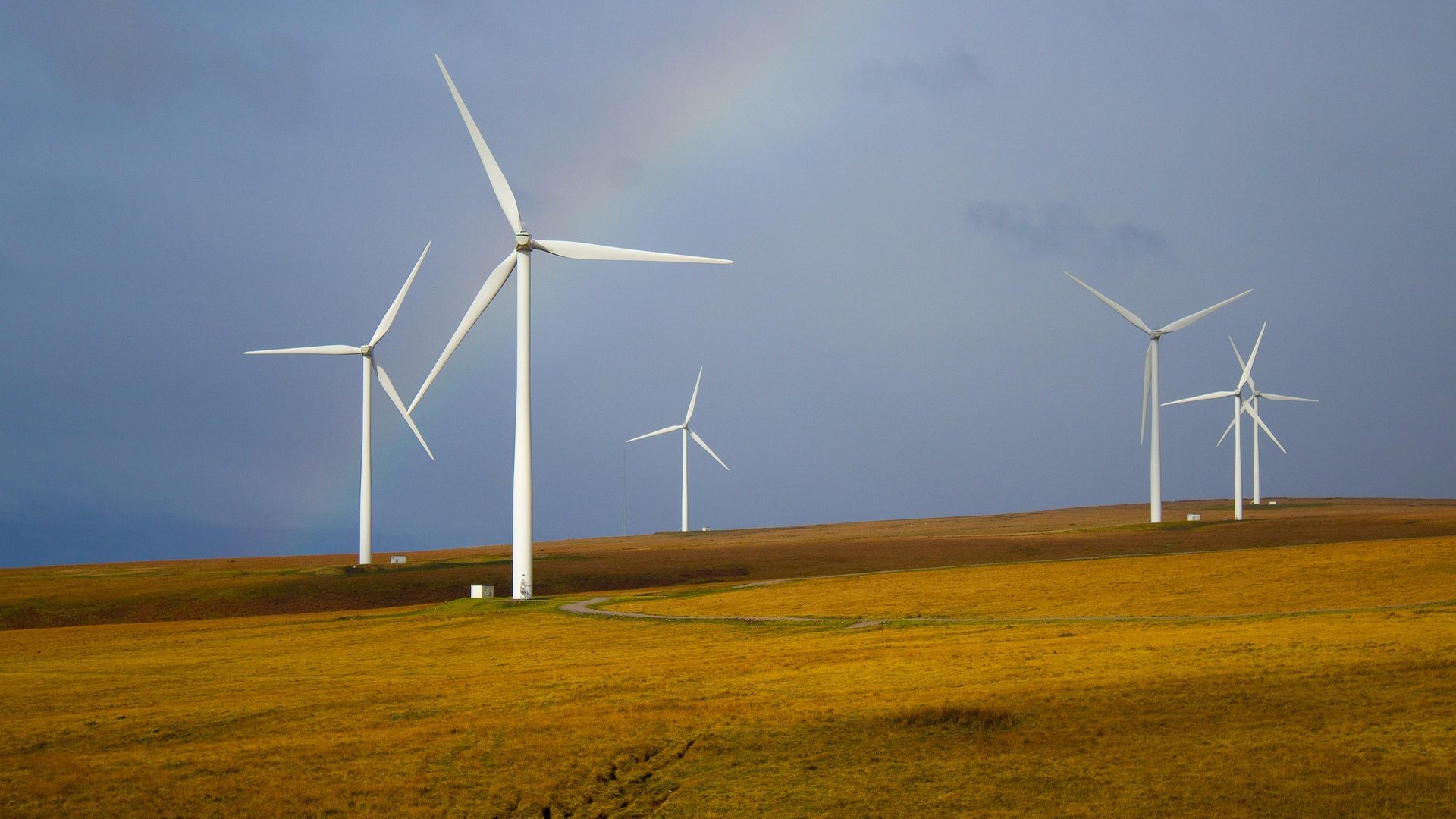
How can regions benefit from the expansion of wind energy? How can tourism, regional economic growth, and renewable energy be combined? And what role do public participation and communication play when local changes clash with differing interests?
These questions were the focus of a trip to Latvia, during which EE.SH shared Schleswig-Holstein’s experiences as part of an international exchange. In addition to a wind energy conference in Kocēni, in the municipality of Valmiera, the trip also included discussions with international partners in Riga.
At the invitation of the Latvian Wind Energy Association, Heike Winkler attended the conference “How (can) wind become a driving force for regional development?” on behalf of the Schleswig-Holstein Renewable Energy Network Agency (EE.SH) and the Nordfriesland Economic Development Corporation mbH.
The event on September 11, 2026, brought together representatives from municipalities, politics, business, and local communities. The focus was on the question of what wind energy projects actually mean for the regions where they are developed: from jobs, tax revenue, and investments to the impacts on the landscape, agriculture, tourism, and local life. Experiences from Latvia, Germany, Denmark, Finland, the United Kingdom, and the Netherlands provided a range of European perspectives.
In her presentation, “How Wind Farms Affect Tourism, or How Participation Can Create Acceptance—The German Experience,” Heike Winkler shared insights from Schleswig-Holstein and, in particular, from North Frisia.
This region is particularly well-suited for this study: North Frisia is one of Schleswig-Holstein’s most tourism-intensive regions and is also heavily influenced by wind energy. According to the data presented in the lecture, approximately 30 percent of Schleswig-Holstein’s wind turbines are located in North Frisia. In 2025, the district also recorded approximately two million visitors and more than ten million overnight stays.
However, that does not mean that wind energy and tourism automatically coexist without conflict. Wind turbines alter landscapes and may be visible from beaches, bike paths, or lodging facilities. Added to this are issues of nature conservation and species protection, potential disturbances for local residents, and, not least, the question of who reaps the economic benefits of a wind farm.
The scientific studies presented in the lecture also paint a nuanced picture. A 2014 study by the Institute for Tourism and Resort Research in Northern Europe found that 65 percent of the guests surveyed had noticed wind turbines during their vacation. 6.3 percent found them disruptive, while 1.1 percent stated that they would not return because of the turbines. Another study by Leibniz University Hannover also points to possible local displacement effects and notes that factors such as distance, the arrangement of the turbines, and the character of the respective landscape play a role.
The experience from Schleswig-Holstein therefore shows one thing above all: what matters most is how wind energy is implemented in a region.
The presentation focused on three key aspects: value creation, participation, and integration.
Regional economic value can be created when municipalities benefit from revenue, local businesses are involved in planning, construction, or operation, and economic benefits remain in the local community. Community wind models also open up opportunities for people to participate directly in wind energy projects.
At the same time, we need land-use planning that takes into account sensitive landscapes, nature conservation, species protection, and areas of particular importance to tourism. Public participation processes give residents the opportunity to share their perspectives and concerns.
This means that acceptance is not merely a matter of communication. Planning, participation, and the distribution of a project’s benefits are all interconnected. In her presentation, Heike Winkler therefore also addressed the social-psychological aspects of acceptance and reactance. Transparency, credible communication, and social dialogue can help ensure that different perspectives are taken into account early on.

The trip also provided opportunities for international exchange beyond the conference program. Among other things, Heike Winkler held discussions with Lasma Livzeniece, Executive Director, and Katrina Duka-Gulbe, Deputy Executive Director of the Latvian Wind Energy Association. In addition, she made contact with Heike Jantsch from the German Embassy in Riga, the German Society for International Cooperation (GIZ), and Indra Freiberga from the Dutch Embassy. The exchange continued in Riga the following day as well.
For EE.SH, this is precisely where the value of such encounters lies: While regions face different starting points in implementing the energy transition, many of the underlying issues are similar. How can people be involved? How can value creation remain local? How can differing land-use interests be taken into account? And how can change be communicated in a way that ensures diverse societal perspectives are truly integrated into the process?
The exchange in Latvia provided an opportunity to share experiences from Schleswig-Holstein while also learning about other European perspectives. After all, whether wind energy can become a driver of regional development is not determined solely by the number of new turbines. It is equally important to consider how the people and regions where these turbines are built are involved in this development.
All images © Lauma Kalnina
